
About a month ago, Afghanistan’s ministry of defense posted on social media photographs of seven brand new helicopters arriving in Kabul delivered by the United States.
“They’ll continue to see a steady drumbeat of that kind of support, going forward,” U.S. Defense Secretary Lloyd Austin told reporters a few days later at the Pentagon.
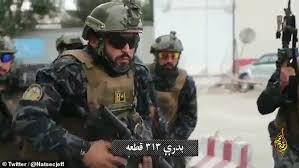
In a matter of weeks, however, the Taliban had seized most of the country, as well as any weapons and equipment left behind by fleeing Afghan forces.
Current and former U.S. officials say there is concern those weapons could be used to kill civilians, be seized by other militant groups such as Islamic State to attack U.S.-interests in the region, or even potentially be handed over to adversaries including China and Russia.
President Joe Biden’s administration is so concerned about the weapons that it is considering a number of options to pursue.
The officials said launching airstrikes against the larger equipment, such as helicopters, has not been ruled out, but there is concern that would antagonize the Taliban at a time the United States’ main goal is evacuating people.
loading
Another official said that while there are no definitive numbers yet, the current intelligence assessment was that the Taliban are believed to control more than 2,000 armored vehicles, including U.S. Humvees, and up to 40 aircraft potentially including UH-60 Black Hawks, scout attack helicopters, and ScanEagle military drones.
The speed with which the Taliban swept across Afghanistan is reminiscent of Islamic State militants taking weapons from U.S.-supplied Iraqi forces who offered little resistance in 2014.
Between 2002 and 2017, the United States gave the Afghan military an estimated $28 billion in weaponry, including guns, rockets, night-vision goggles and even small drones for intelligence gathering.
But aircraft like the Blackhawk helicopters have been the most visible sign of U.S. military assistance, and were supposed to be the Afghan military’ biggest advantage over the Taliban.
Between 2003 and 2016 the United States provided Afghan forces with 208 aircraft, according to the U.S. Government Accountability Office (GAO).
In the last week, many of those aircraft were most useful for Afghan pilots to escape the Taliban.
One of the U.S. officials said that between 40 and 50 aircraft had been flown to Uzbekistan by Afghan pilots seeking refuge. Even before taking power in Kabul over the weekend, the Taliban had started a campaign of assassinating pilots.
Some planes were in the United States for maintenance and will stay. Those en route to Afghan forces will instead be used by the U.S. military to help in the evacuation from Kabul.
Current and former officials say that while they are concerned about the Taliban having access to the helicopters, the aircraft require frequent maintenance and many are complicated to fly without extensive training.
“Ironically, the fact that our equipment breaks down so often is a life-saver here,” a third official said.
Retired U.S. Army General Joseph Votel, who oversaw U.S. military operations in Afghanistan as head of U.S. Central Command from 2016 to 2019, said most of the high-end hardware captured by the Taliban, including the aircraft, was not equipped with sensitive U.S. technology.

 9Naija