

Home like a lot of people, you might go to the nearest window, open the blinds, and let the morning sunshine warm your face. There’s nothing quite like the Sun’s rays to brighten your day and get you started off right.
We humans tend to really enjoy the Sun. Whether playing on a sandy beach in the middle of summer or soaking in the rays by the side of the pool, we love the warmth the Sun provides. Even as seasons change and temperatures drop, a ray of sunshine on a wintry day can warm the heart.
Have you ever WONDERed how important the Sun is to us here on Earth? Exactly what would happen if the Sun suddenly disappeared? Or what would we do if the Sun suddenly went out?
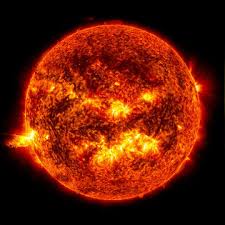
The Sun is a star and the center of our solar system. Everything in our solar system revolves around the Sun. It’s impossible to understand fully how crucial the Sun is to life on Earth and the very existence of all the other planets around us.
The Sun’s immense mass draws all the other planets in the solar system toward it. Since Earth and all the other planets are moving very fast through space, the Sun’s presence keeps them moving around itself. If the Sun were to suddenly disappear, Earth and the other planets would retain their forward motion, effectively flying off into outer space in a straight line.
No one has any idea what would happen if that occurred. What’s certain, though, is that we Earthlings would soon be lost in space!
Of course, without the Sun none of us would even exist in the first place. Scientists who have studied the origins of life on Earth point to Earth’s perfect positioning with regard to its distance from the Sun as a main factor in creating the conditions that allow life to exist on Earth.
So what would happen to that life if the Sun suddenly went out? Because light from the Sun takes eight and a half minutes to reach Earth, we wouldn’t notice immediately if the Sun suddenly went out. Nine minutes later, though, we’d find ourselves in complete darkness.
If it was already dark on our side of the world, we’d notice the Moon suddenly disappear. Why? The Moon does not produce light. We only see the Moon because sunlight reflects off of it. As the sunlight that was illuminating the Moon disappears, so would the Moon! The same would go for the many other celestial bodies in the sky, such as planets, which we see only because of the Sun’s reflected light.
Without the Sun’s warmth, Earth would quickly become a much colder place. Fortunately, Earth retains heat fairly well, so humans wouldn’t freeze instantly. Life would get much more difficult immediately, though.
Although no one can know for sure exactly what would happen, scientists estimate that the average global surface temperature would drop below 0º F within a week or so. You’ve probably withstood such temperatures during cold winter months before, so what’s the big deal?
The problem is that the temperature would continue to drop steadily. Within a year, the average global surface temperature could dip well below -100º F! By that time, the top layers of the oceans of the world would have frozen over.
Although the frozen top layers of the oceans would insulate the deep waters below, keeping them liquid for hundreds of thousands of years, they would eventually freeze as Earth moved toward a stable average global surface temperature of about -400º F. At that point, the atmosphere would have also frozen and fallen to Earth, leaving anyone left alive exposed to the harsh cosmic radiation that travels through space.
Without the Sun’s rays, all photosynthesis on Earth would stop. All plants would die and, eventually, all animals that rely on plants for food — including humans — would die, too. While some inventive humans might be able to survive on a Sun-less Earth for several days, months, or even years, life without the Sun would eventually prove to be impossible to maintain on Earth.
If the Sun suddenly went out, what would you miss the most? Sunrises? Sunsets? Warm summer days? Make a list of your top 10 favorite things you’d miss about the Sun. Share your list with friends and family members. Ask them to vote on the things they’d miss the most. Are there things not on your list that they’d miss?
After taking an informal poll, present your findings to friends and family members by creating a simple chart or picture that shows what people would miss the most about the Sun.Imagine that the Sun does go out several years from now. As an intrepid explorer of the world, you vow to survive. You know that the oceans will freeze over, but that warmer water will continue to exist deep below the surface. Write a short story about your struggle and journey to a place where you plan to survive the loss of your planet’s home star. Be sure to include plenty of details about how your world changes and what incredible obstacles you face in your search for a new way of life.Up for a challenge?
Pretend that you’re the owner of the world’s largest producer of sunglasses. Scientists have just announced that the Sun will be going out in approximately one year. As the head of your company, you realize that your product will be rendered useless by the absence of the Sun. What will you do? Rather than simply go out of business, it is your task to use your imagination to come up with a new business plan for the transition to a Sun-less sky. Is there another use for sunglasses that you could promote instead? Or could you use your raw materials to produce something else valuable in a frosty world? Have fun using your imagination to develop a new business plan for a company with a soon-to-be-obsolete product!

 9Naija